What’s the Best Way to Match AI Language Solutions to Communication Complexity?
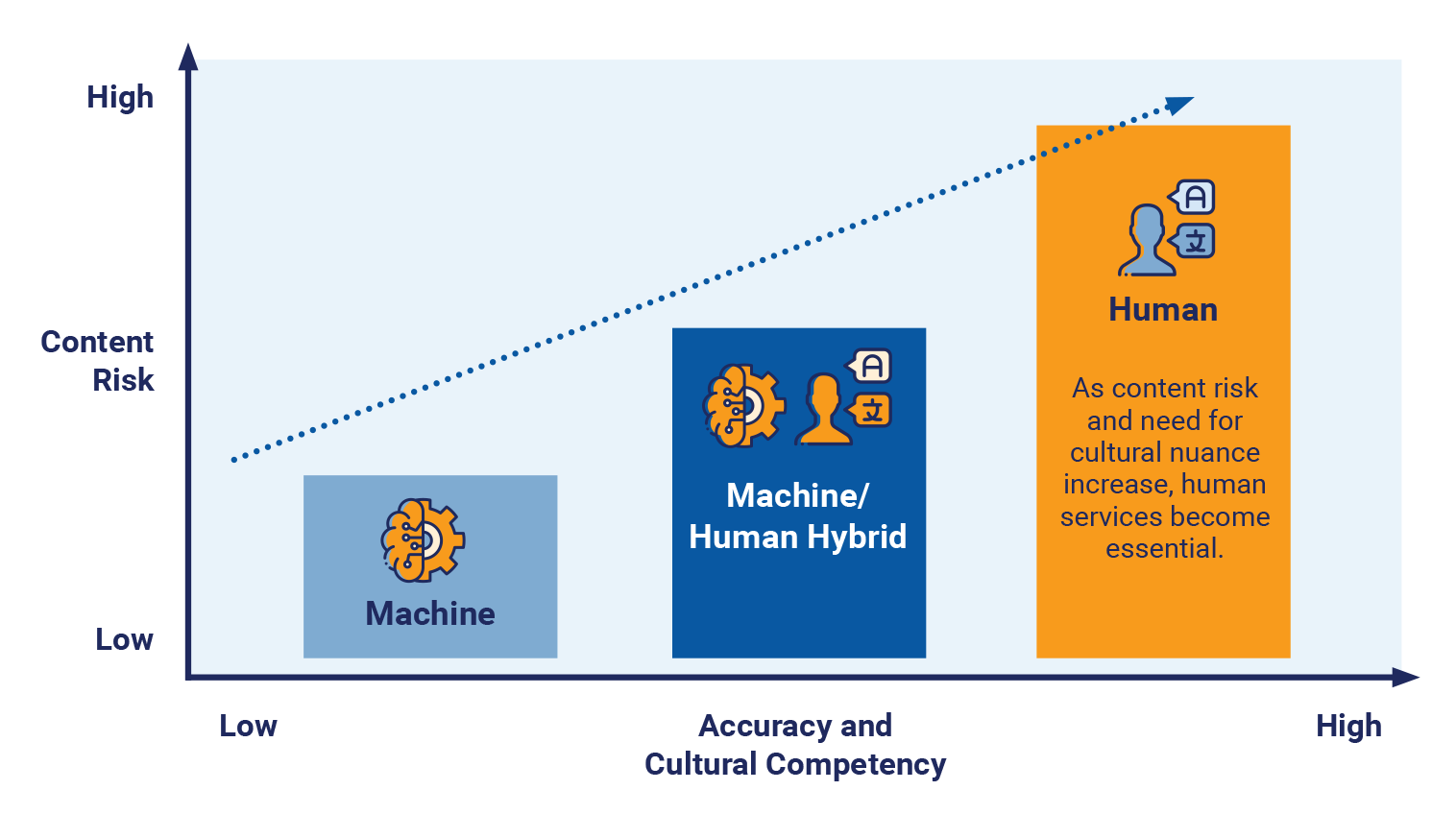
- Machine Translation or AI Interpretation – Ideal for low-risk, high-volume needs like internal documents or basic customer support.
- Hybrid (AI + Human) – Best for moderately complex tasks where speed matters but oversight is still needed, such as client-facing emails or interpreting interactions that increase in risk midstream.
- Human Linguists – Essential for high-stakes, nuanced communication like legal, medical, or crisis scenarios.
Choosing the right language solution depends on the complexity and risk of your message. Our AI-powered translation and interpreting tools help you respond quickly—while keeping expert human linguists available when precision and empathy are critical.
🖼️ View the graphics below to explore the complexity spectrum in detail.
👉 Want to learn more? Read our blog on the complexity spectrum.
Why Accuracy and Cultural Insight Matter in Language Solutions
In interpreting and translation, accuracy goes beyond the word-for-word meaning—it’s about conveying intent, tone, and cultural nuance. As language complexity rises, so does the risk of miscommunication. AI may handle routine statements well, but it may also miss subtle cues that trained human linguists naturally catch—such as emotional tone, hesitation, or culturally sensitive phrases. In high-risk environments like legal consultations or emergency care, these nuances can be life-saving. That’s why expert human linguists remain essential when precision and cultural fluency are critical.
Balancing Cost with the Complexity of Human Interaction
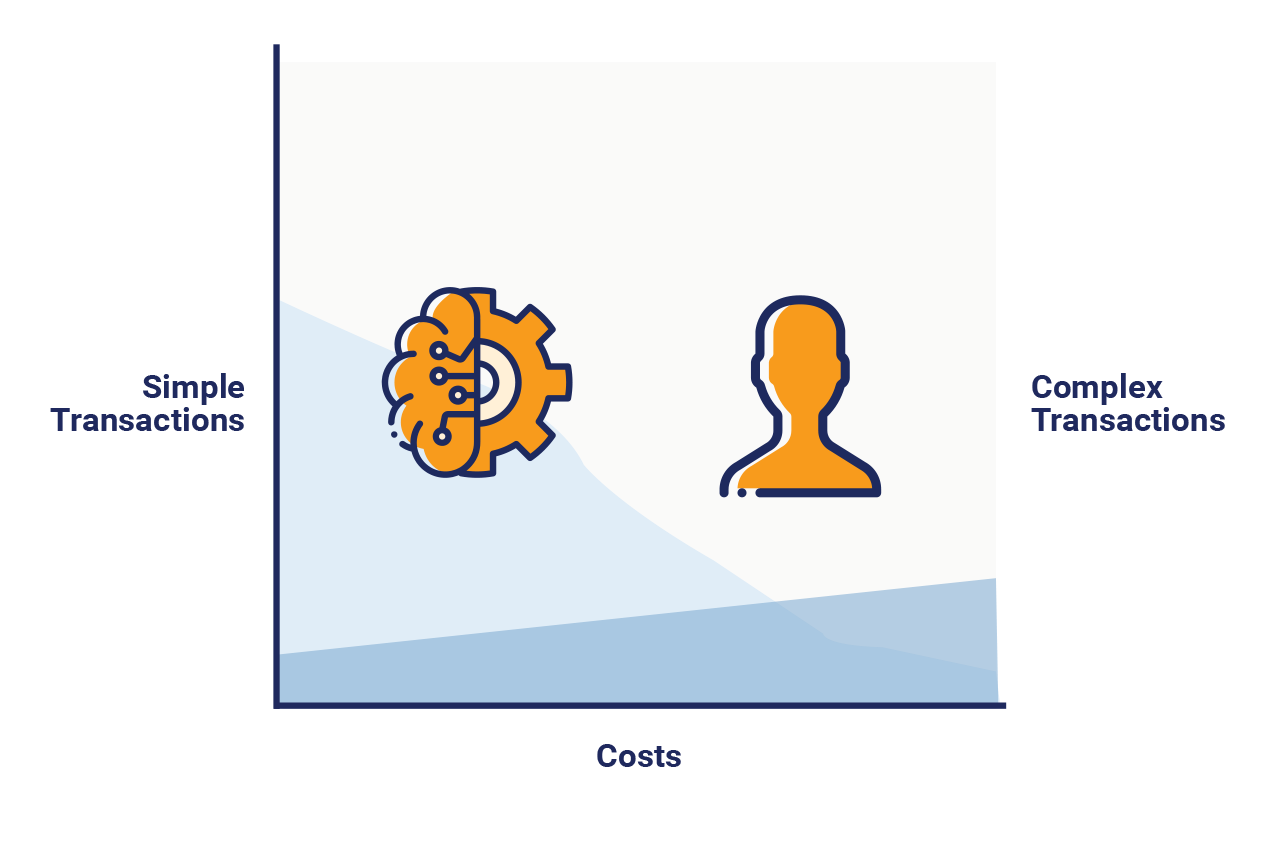
AI language solutions offer significant cost savings for low-risk, transactional interactions—think appointment scheduling or order confirmations. However, as the interaction grows more complex or emotionally charged, the stakes increase. Misinterpretation in high-touch settings like mental health or child welfare isn’t just costly—it can be catastrophic. A hybrid strategy—using AI for routine or low-stakes interactions and human linguists for high-complexity interactions—helps organisations maximise efficiency without compromising on care, clarity, or compliance.
LanguageLine's Position on AI
LanguageLine’s approach to artificial intelligence unites the best of all worlds, joining the efficiency of AI with the skill, sensitivity, and wisdom of human linguists.
Our emphatic belief is that this results in the most accurate, authentic, and heartfelt connections across languages and cultures.
Our goal is to design programmes that enable our clients to cost-effectively serve their LEP communities with quality interpretation and translation in every circumstance from the routine to the complex.
Data Protection Notice for UK Participants
This pilot is currently undergoing development and has not yet completed GDPR readiness. Participants are invited to explore the technology under the understanding that full data governance and GDPR-aligned processing mechanisms are still in progress. Please do not use this solution for any personal, sensitive, or protected information during the pilot phase.
You may request your data to be removed or deleted at any time by contacting us directly.
Be part of this exciting new initiative!
Try out our next gen technology for written and spoken solutions
From the Blog
October 10, 2025
Unlocking ROI: The Future of AI-Driven Translation and Human Collaboration
September 24, 2025
AI-Driven Post-Editing: A Roadmap to Integration and ROI (Webinar)
September 4, 2025
A Smarter Path to Global Growth: Website Localization Meets Machine Translation
September 1, 2025
Put Your AI Interpreting to the Test: How to Evaluate Test Calls (Infographic)
August 18, 2025
A Leader's Guide to AI Interpreting (eBook)
August 14, 2025
From Two PDFs to 2 Million Words, How the Code Was Cracked on Complex Educational Translation
August 4, 2025
Case Study: How We Made Interpreter Access as Simple as Siri and Alexa
July 30, 2025
Is Your Interpretation ‘Responsibly Sourced’?